How Light and Furniture Shape a Comfortable Home
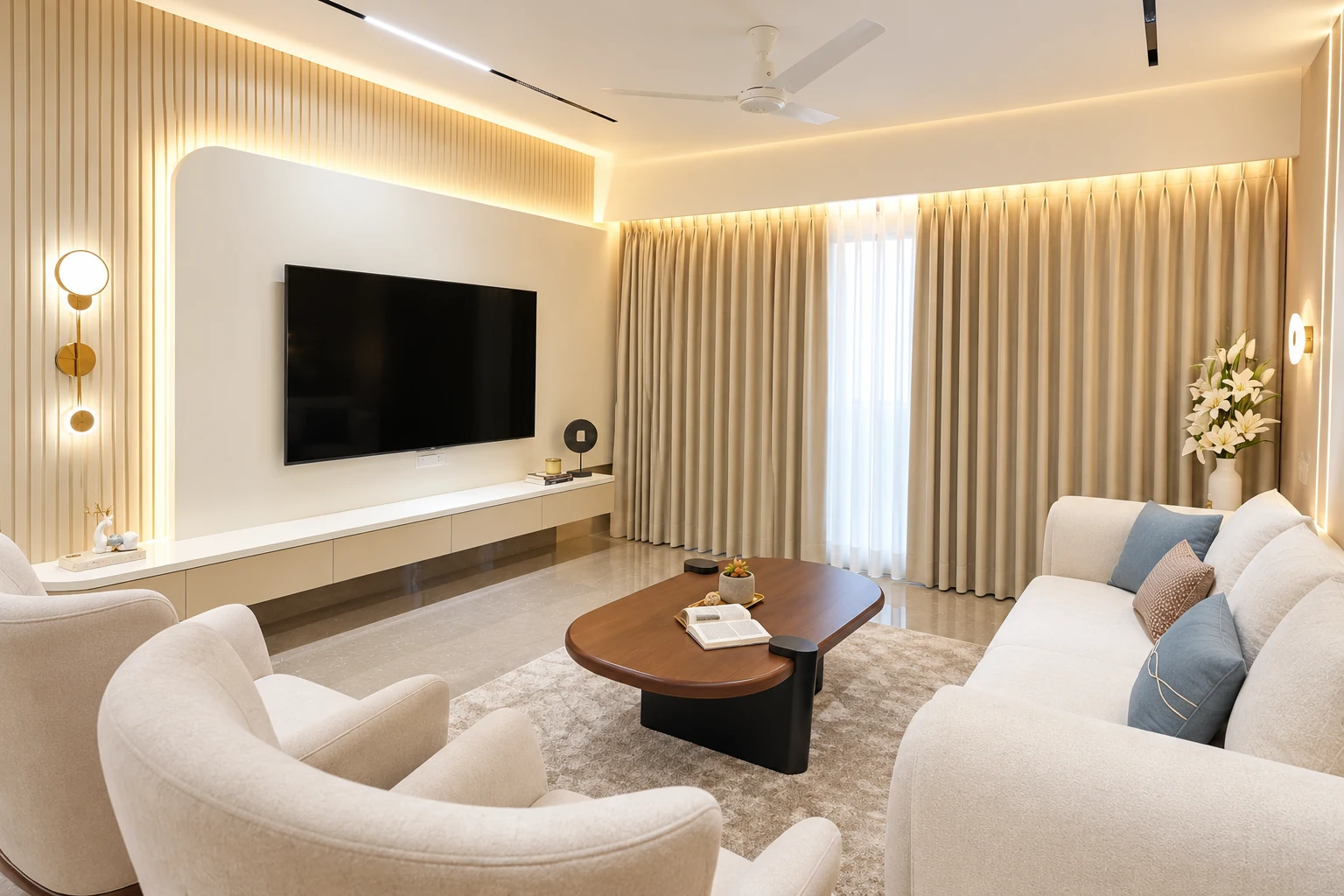
Comfort at home is not one finish or a particular style. It can begin with where a seat faces, how people gather, what sits within reach and how different layers of light meet the rooms.
When someone says a home should feel comfortable, I want to understand what that means in the room itself. Where do people sit together? Is there a smaller place to pause? What is within reach, and how does light change across the day? The answers vary from home to home; these questions make comfort more concrete than a style label.
Arrange the shared space around use
A sofa, chairs and a table can create a shared centre when they relate to one another. In the warm modern home in this portfolio, the main seating is gathered around a rounded coffee table and a textured rug. The arrangement is easy to read: the pieces face a common point, while the room keeps enough visual space around them to remain calm.
Furniture should suit the room’s movement. A chair that looks right in isolation may interrupt a route or sit too far from the table. I consider how someone enters, where a seat faces and what the rest of the room needs to hold. The right arrangement grows from these relationships.
Read my reflection on A Warm Modern Home →
Make room for a smaller pause
A window-side seat can create a smaller setting with a different view and scale. At A Warm Modern Home, the seat sits beside an illuminated display wall. The window, seat and lit shelves create a distinct pause alongside the wider living room.
A window seat also asks practical questions: how it relates to the opening, whether curtains can move comfortably and how the seat fits with circulation. The goal is not to add a reading nook because a picture suggests one. It is to understand whether that corner has a useful relationship to the wider plan.
Layer light instead of asking one fixture to do everything
A room can receive light from more than one direction and at more than one height. Concealed light near a ceiling edge, a wall light near a seat and daylight from a window each create a different visual layer. Curtains soften a window edge; a display shelf can be lit separately from the larger seating group.
The useful balance is between visibility and atmosphere, shaped around the tasks and surfaces in the room. Concealed light follows the ceiling edge and curtains; a wall light gives the seating area its own focus; the window brings in daylight. Their placement lets light work with the furniture and finishes rather than sit apart from them.
Let quieter rooms have a different rhythm
A bedroom does not need to repeat the living room’s arrangement or focal points. A padded headboard, layered bedding and curtains create a different set of surfaces. In the home example, glossy wall panels contrast with the softer fabrics; warm perimeter lighting adds depth around the edges.
A restrained palette gives the bedroom a quieter visual rhythm. Fabric, light and the room’s main pieces bring depth and texture while keeping the composition distinct from the shared living area.
Comfort comes from relationships
A comfortable home is shaped by several modest decisions working together: a seat that faces the people it belongs with, a table within reach, a curtain at the window, a smaller place to pause and light that suits the surfaces around it. The decisions are ordinary, but their relationships are what make a room feel resolved.
I find it useful to begin with those relationships before choosing a mood or a finish. First understand how the home is used; then make a plan for movement and gathering; then bring in furniture, light and material with a reason to be there. The result feels grounded in the routines that give a home its character.
Continue reading
Courtyards were never just empty space. They were the spatial idea that made Indian homes work — bringing daylight, air, community, and memo…