SA Dosa Café
At SA Dosa Café, artwork carries a visible part of the room’s character while everyday furniture keeps the dining setting familiar and clear.
Letting art carry identity
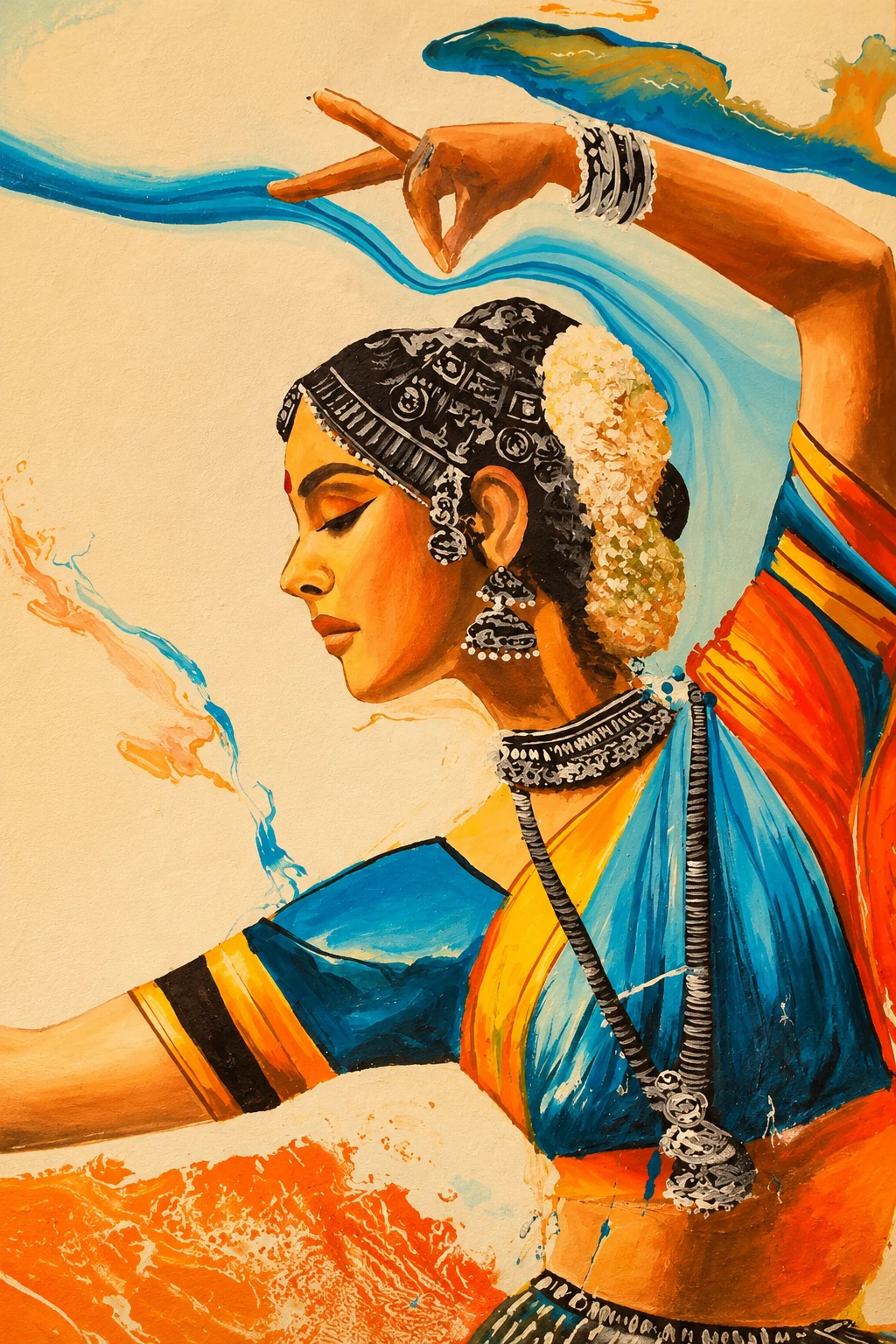
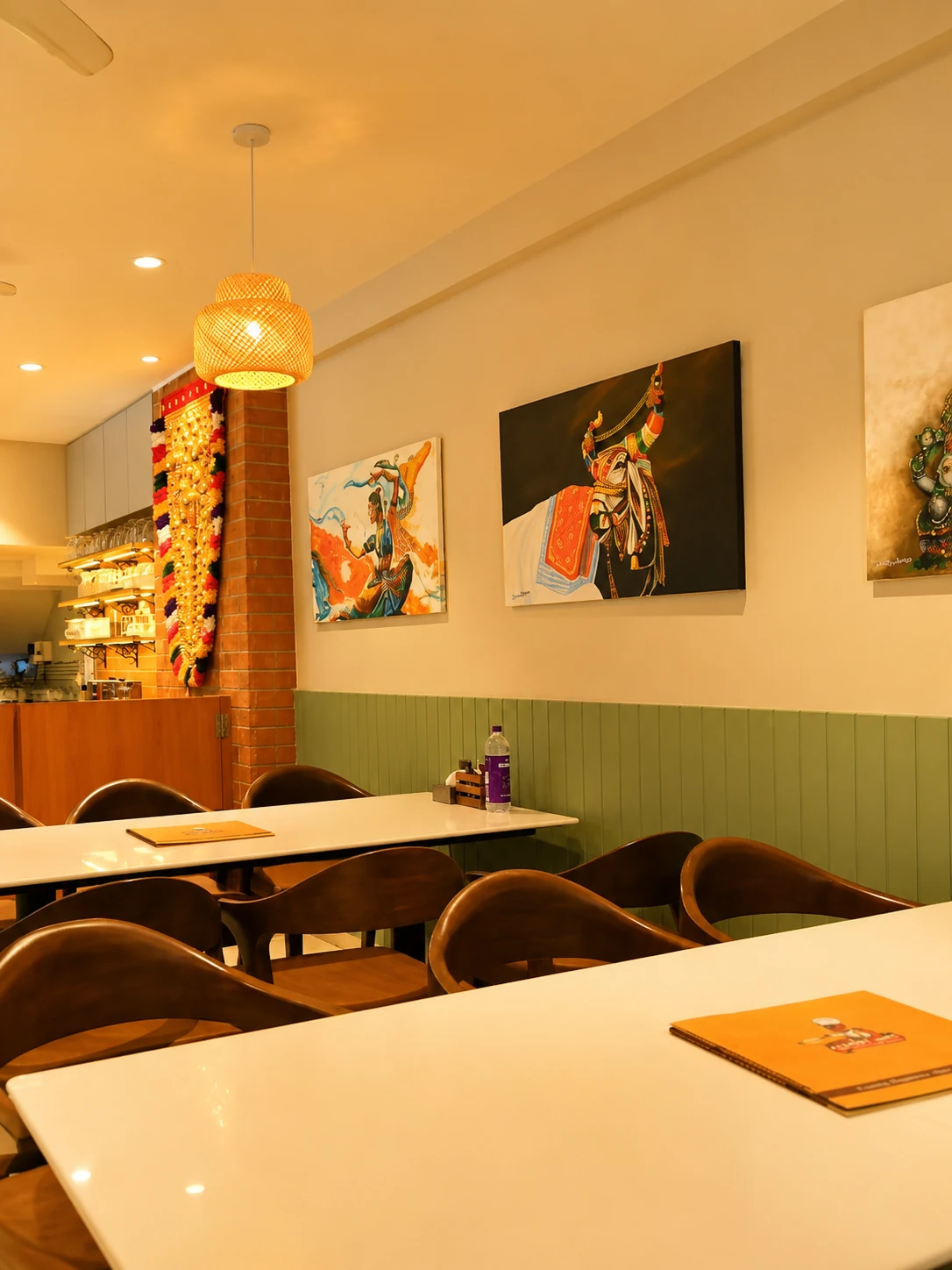
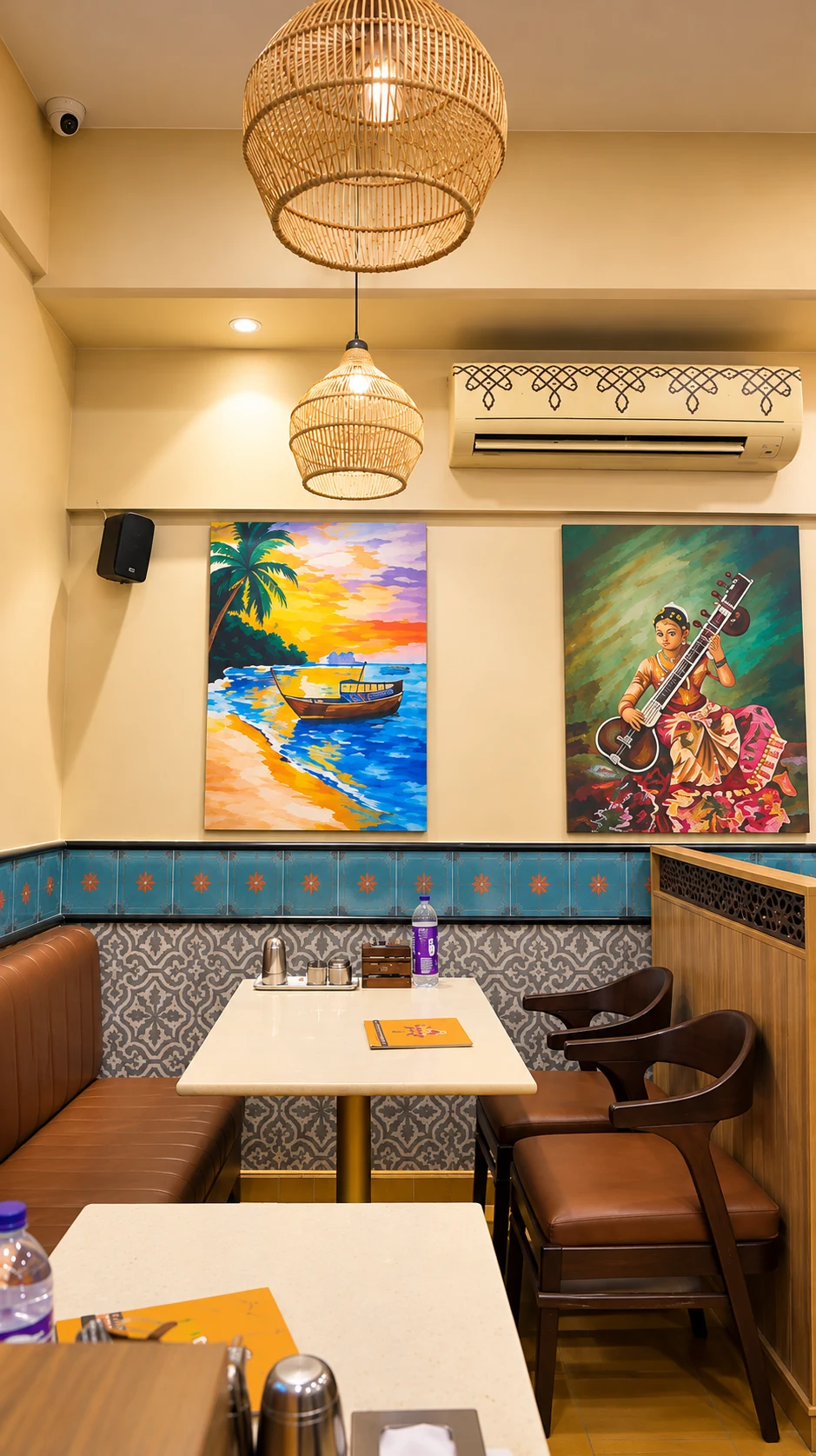
SA Dosa Café is in Pune. The room’s identity comes through specific visual choices, particularly colourful paintings of dance, music and landscape. The artwork sits above the dining furniture as a focal layer rather than being repeated over every wall.
I like this kind of balance. Art can give a café a point of view, while the rest of the interior remains simple enough to use every day. The paintings carry colour and movement; the tables and chairs give the room a more settled rhythm.
A quieter background for expressive images
Cream walls and pale tabletops provide a calm background. Green wall panelling and warm-toned chairs add colour closer to the furniture, while the paintings introduce stronger notes of blue and orange. These layers are distinct, so the artwork can be noticed without turning the whole room into one continuous pattern.
One close view of a dancer painting makes the contrast especially clear. The image has its own energy; the furniture below it is restrained. That relationship lets the art become part of the café’s character without requiring the tables, chairs and walls to compete for equal attention.
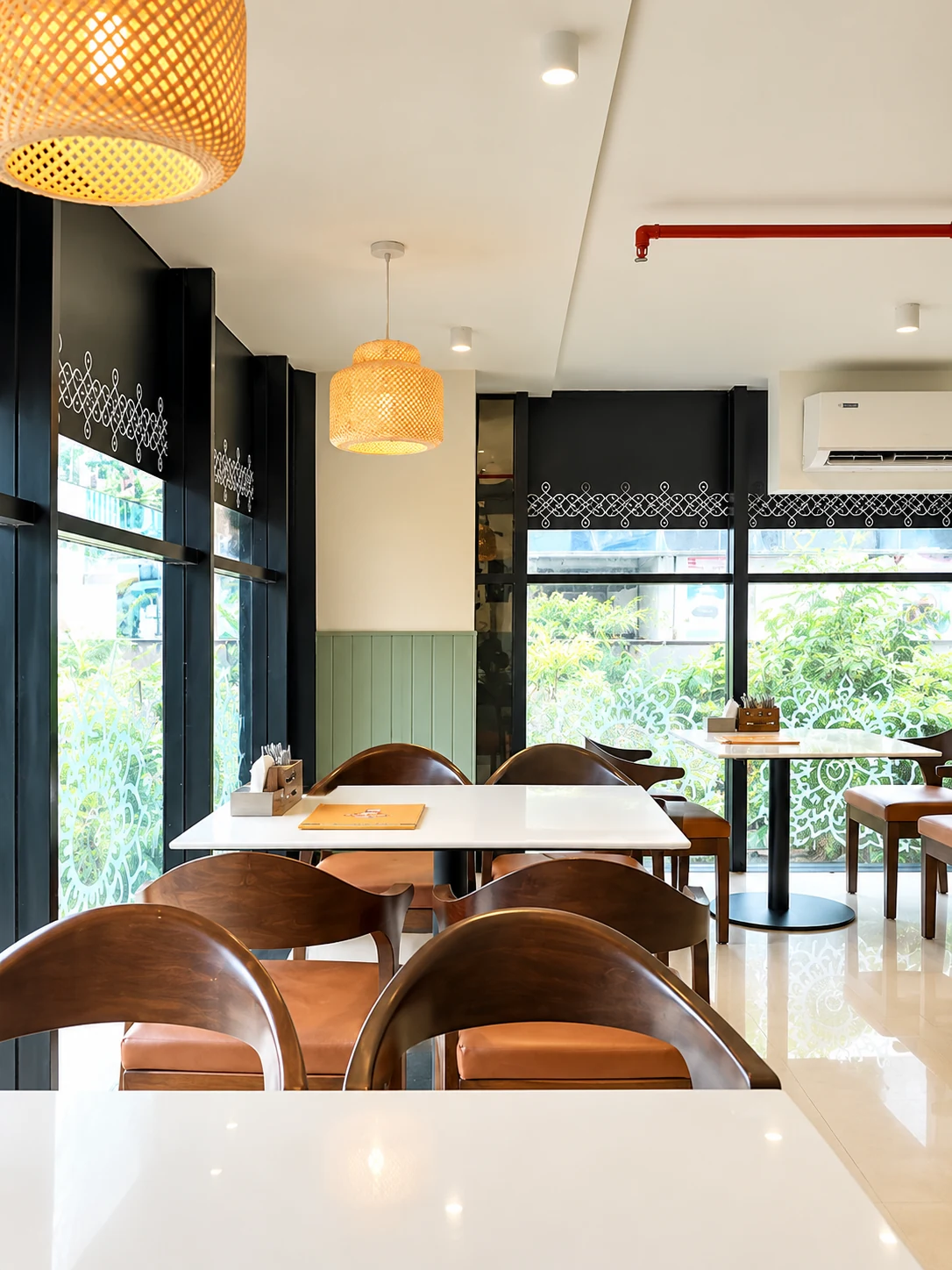
Window-side light and the dining rhythm
Pale square tables and curved-back chairs form a simple dining arrangement. Near the tall glazed openings, daylight reaches the window-side tables. Woven pendant shades add another texture overhead and bring a warmer scale of detail closer to the seats.
The tables, windows and counter sit in a clear relationship, balancing places to sit with routes for guests and service. Arrival, ordering and dining share one setting.
The entrance as an introduction
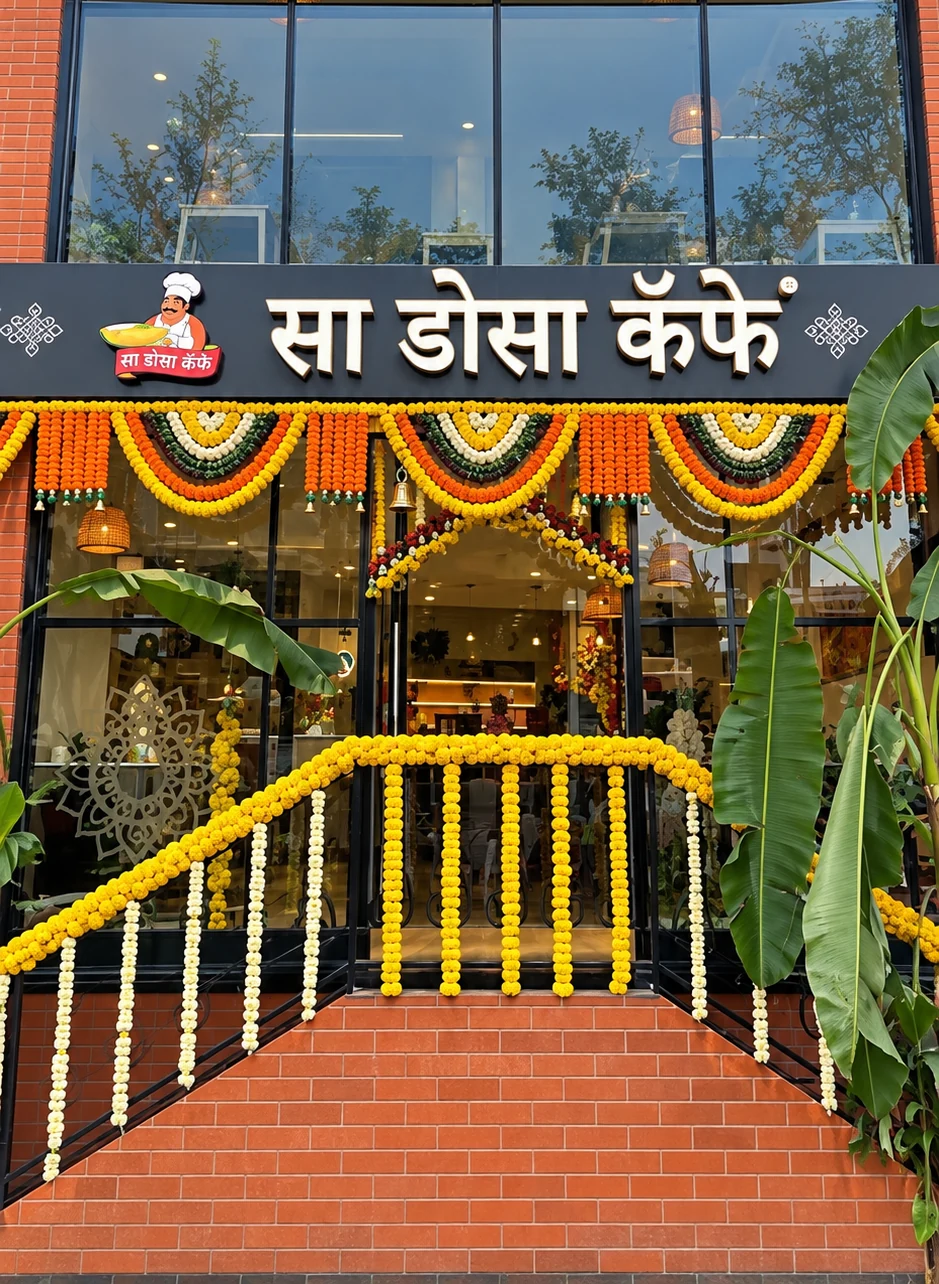
The entrance image shows the café name in Marathi above the doorway, with a stepped approach and festive floral decoration. Inside, the green panelling and artwork continue that sense of welcome through a more everyday language. The visual identity does not end at the sign; it is carried into the dining room by the colours and images.
The transition is modest but clear: approach, name, interior, table. I find that sequence useful to think about because arrival is not only a door or a facade. It is the first few things a person understands about the place.
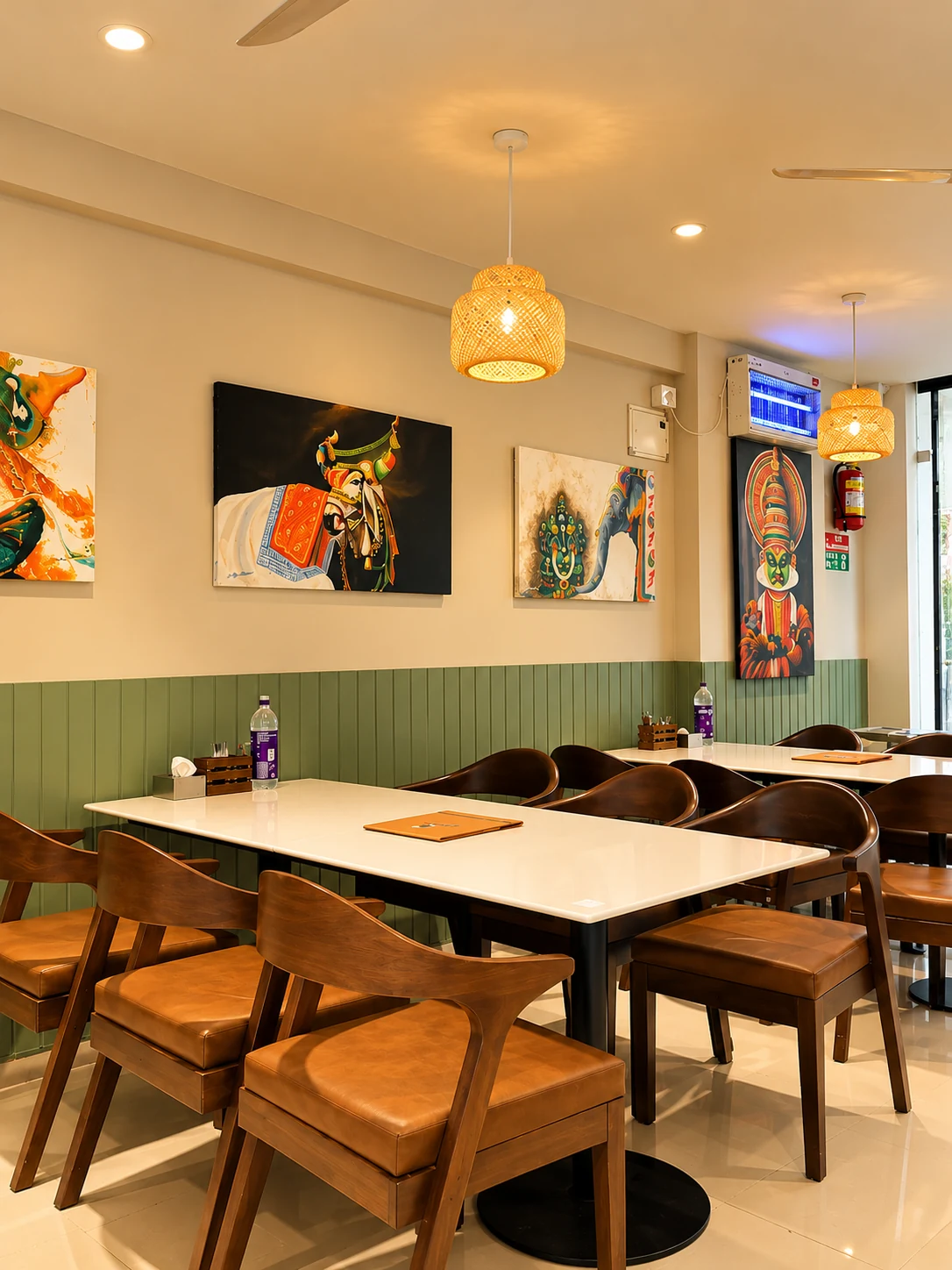
A familiar place to share a meal
The project holds a cultural reference through its food and artwork while the furniture remains contemporary and approachable. Simple dining pieces let the paintings and window-side light do more of the expressive work. Woven pendants and green wall tones provide texture without requiring a new focal point in every view.
For me, the lesson is not to make cultural identity louder at every surface. A few carefully placed images can give a dining room a distinct voice, especially when the surrounding architecture leaves them room to be seen. SA Dosa Café shows how an ordinary table, a window and an artwork can belong to the same welcoming setting.