Café Peter, Erandwane
Café Peter keeps returning me to a simple question: how can one clear shape help a compact room feel easy to read without filling it with unrelated gestures?
A shape that starts at the street
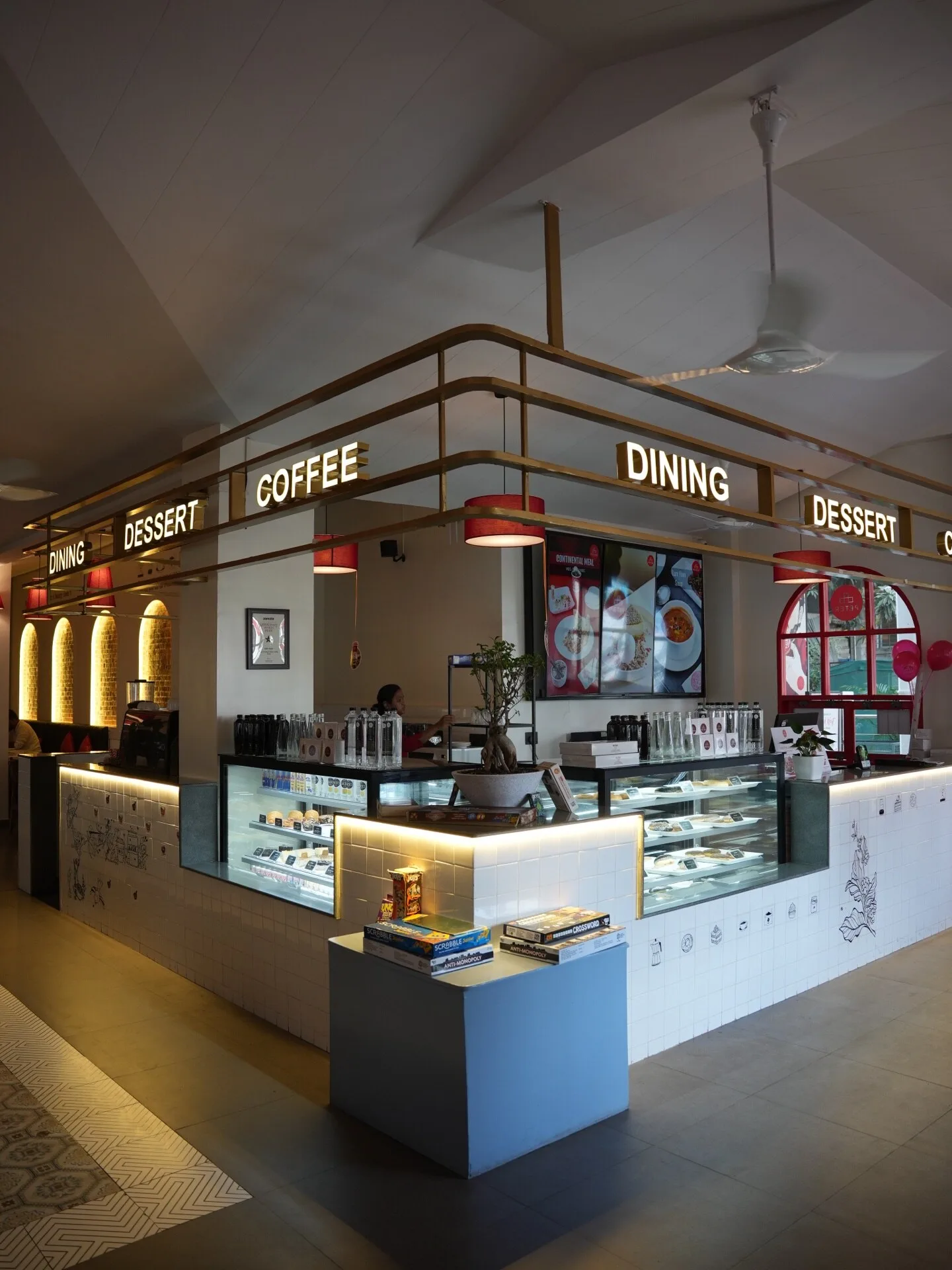
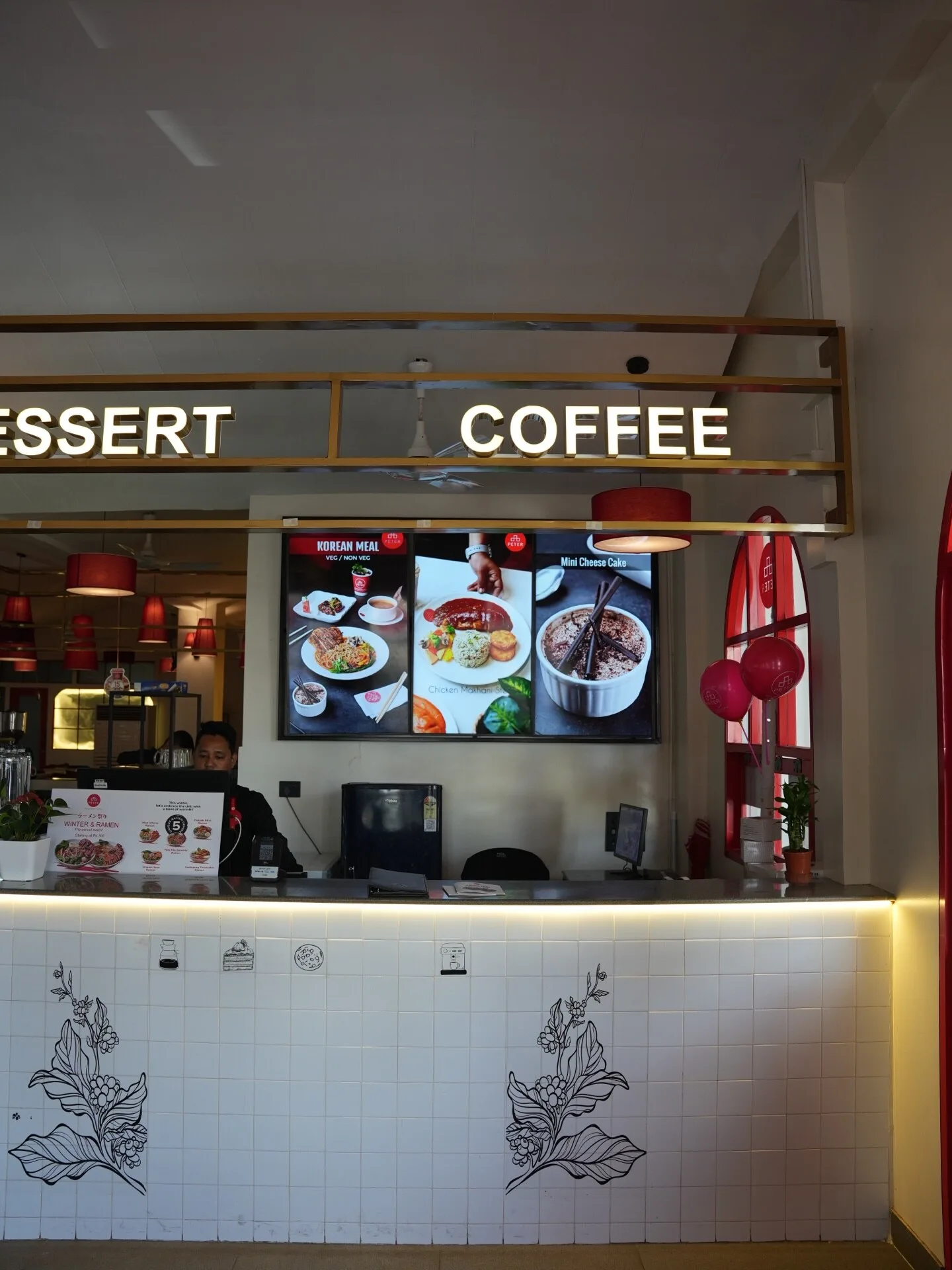
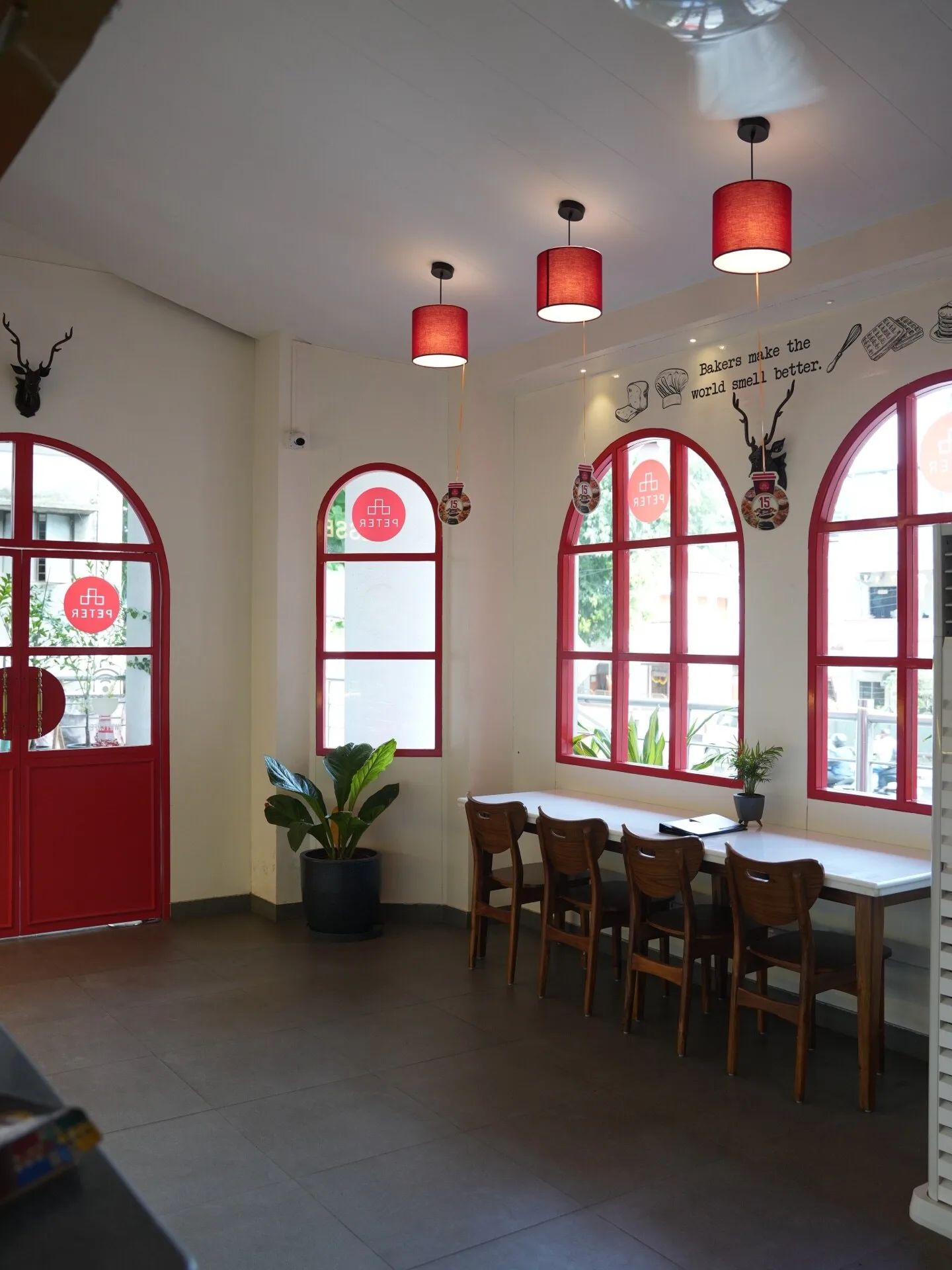
Café Peter is on a lane in Erandwane, Pune. Its street-facing arched windows have red-painted frames. What interests me is how that shape continues inside rather than remaining a facade treatment. The same geometry appears again in openings and seating recesses, tying the first view to the room beyond it.
In a compact café, a repeated shape can do more than decorate a wall. It can help the visitor understand where the room changes, where a seat is held and how one part relates to another. That continuity lets a small number of decisions carry the design.
Repetition with different uses
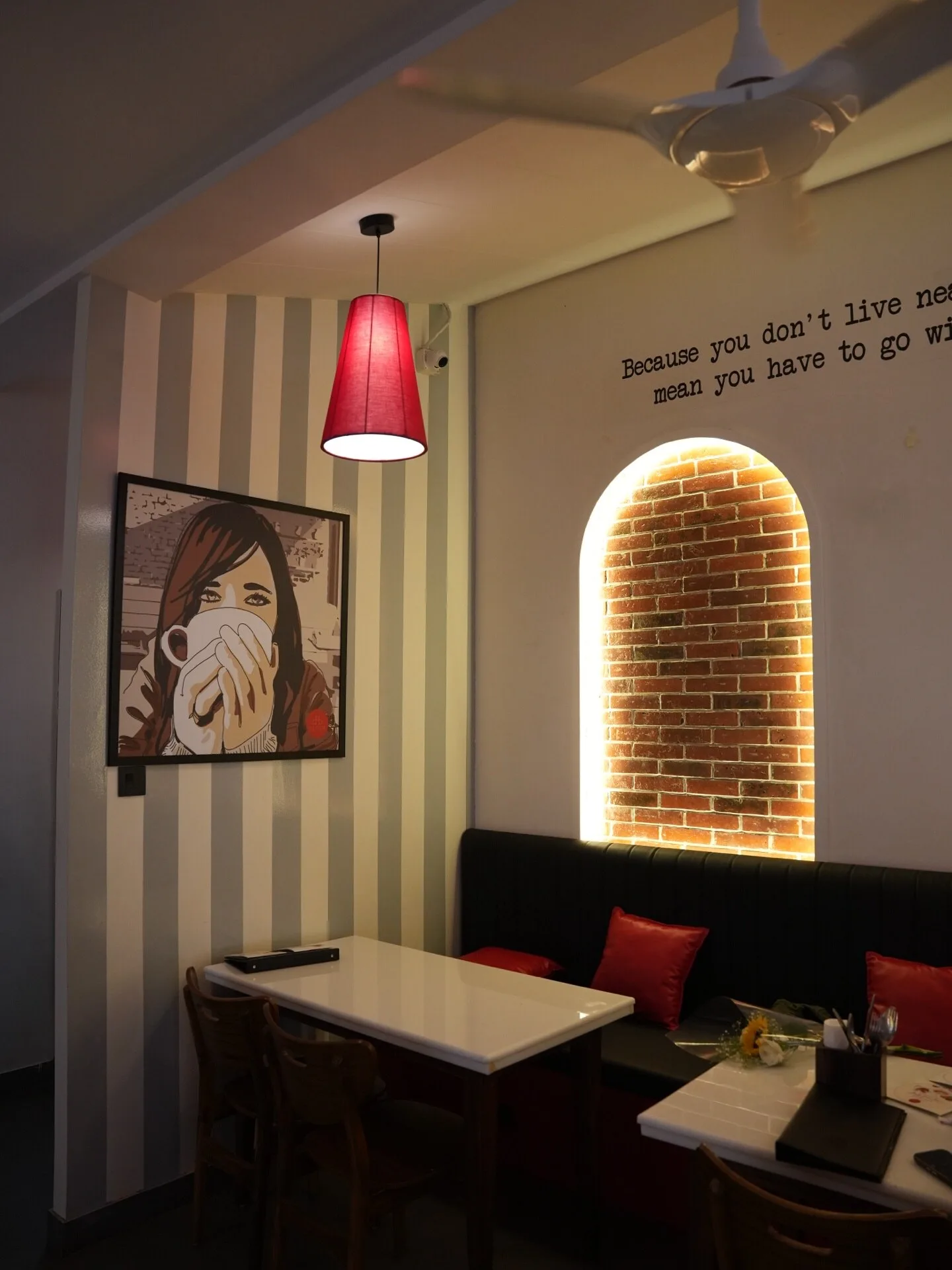
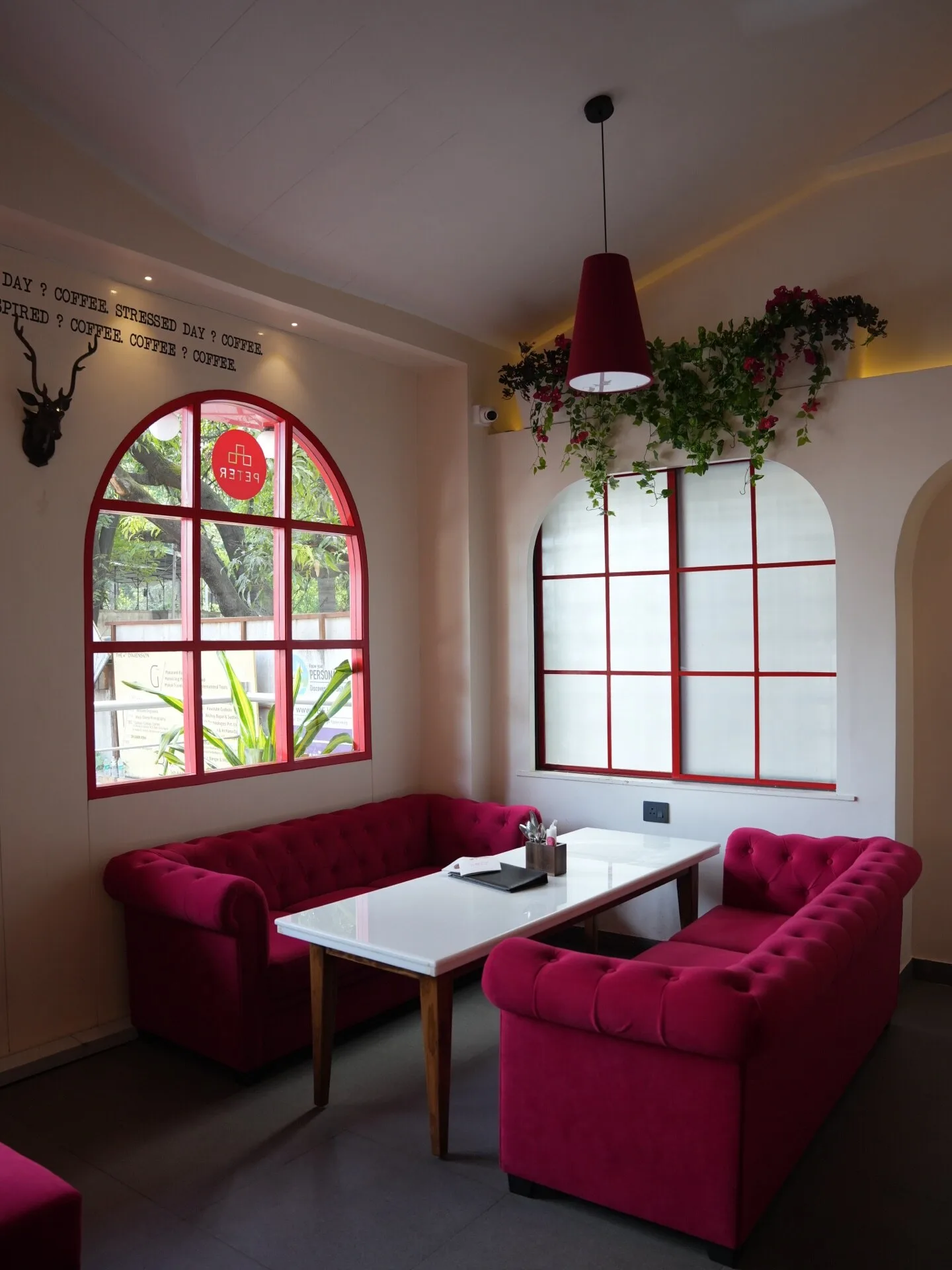
Each arch takes on a slightly different role: one relates to the street, another divides a seating area, and one holds a curved sofa bay. The repeated outline gives the room rhythm while the furniture gives each instance a distinct purpose.
That is the difference I see between a motif and an organising idea. A motif can be added once the plan is finished. An organising idea helps the plan become legible. At Café Peter, the frame links windows, internal openings and seating, so the geometry belongs to how the room is used.
A compact plan, clearly read
Tables and chairs occupy the main dining zone; the curved sofa creates another kind of seat inside an arched recess. A service counter with a display faces the room. These are distinct settings, yet each remains visible within the same compact interior.
Entry, seating and counter form a readable sequence. The spatial order is present in the architecture itself, while the café remains connected rather than divided into separate rooms.
Warm light, green and red
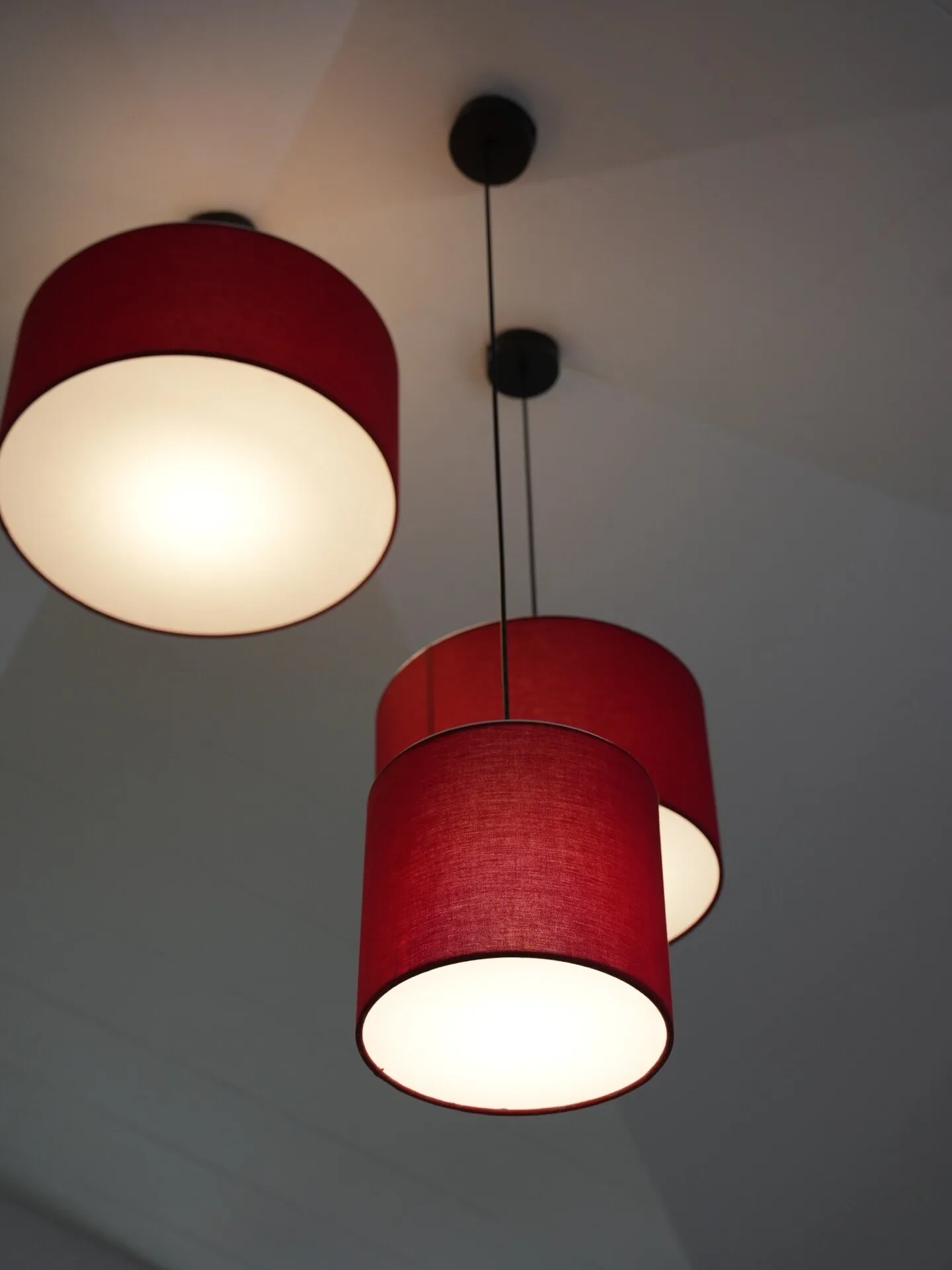
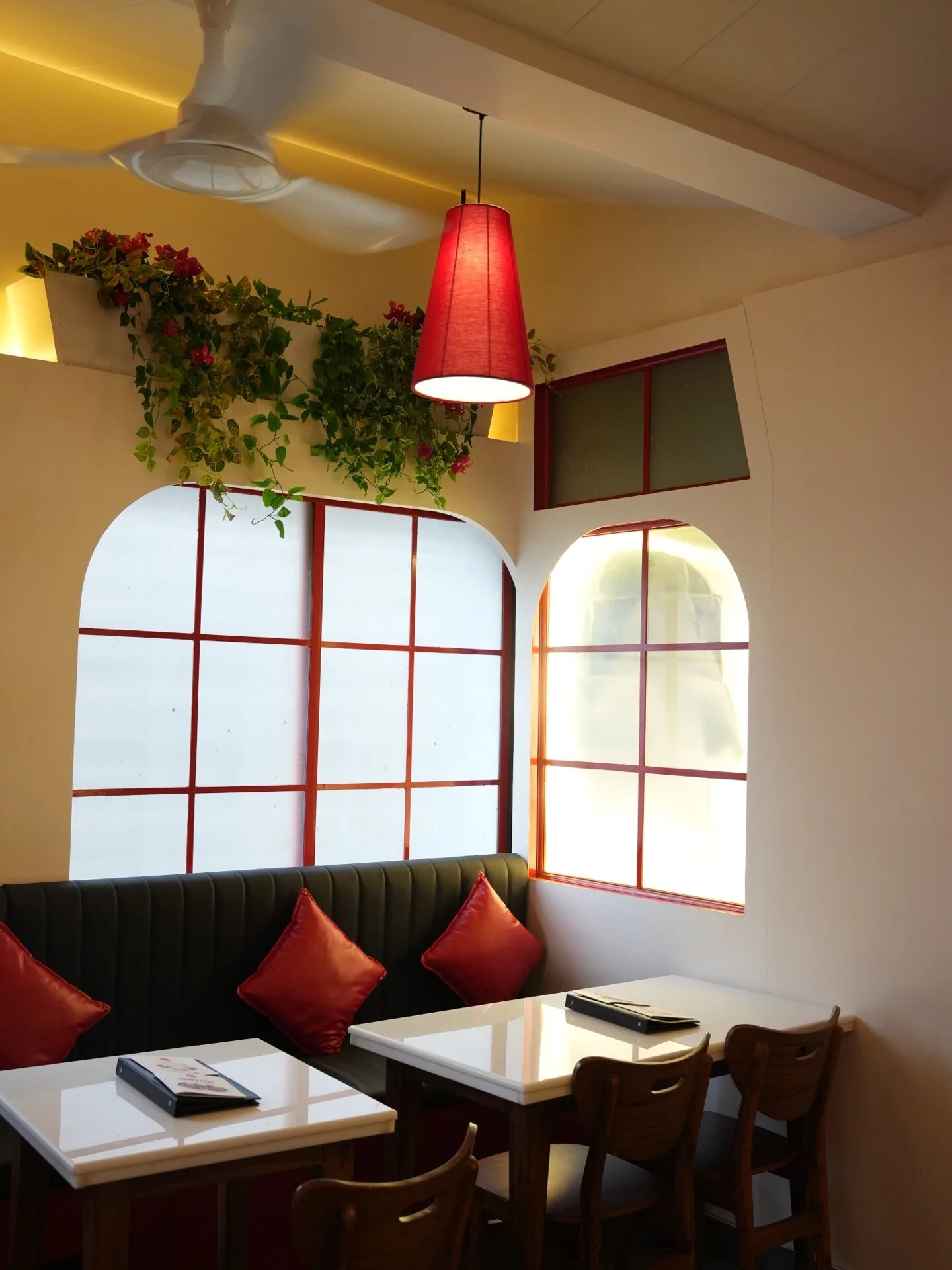
Cylindrical pendant lights with red shades echo the frames above the dining areas. Their glow changes the way the red reads: in daylight it is crisp; beneath warm light, it sits more softly with the tables. A planting shelf runs along the upper part of a wall, adding a quieter line of green above the seating.
Warm light softens the geometry, while plants, the sofa and service counter bring different textures and scales to the repeated arch.
A memory built from relationships
Café Peter suggests a considered way to build a memorable interior: allow one clear element to recur, then let light, seating and detail change its context. The arch appears at the street, continues through the interior and finally becomes a frame around a place to sit.
What stays with me is the connection among the frames, warm pendants, planting, compact tables, sofa bay and counter. They belong to one visual language. For a small café, that continuity is a generous form of clarity.